
Home > Department of Public Works > Storm Water Management
What is Stormwater?
Human activity is largely responsible for stormwater pollution. Everything that we put on the ground or into the storm drain can end up in our water. Each of us has a responsibility to make sure these contaminants stay out of our water. Whether we have clean water is up to you.
The official definition of stormwater under the New Jersey Pollutant Discharge Elimination System(NJPDES) regulations at N.J.A.C. 7:14A is as follows:
'Stormwater' means water resulting from precipitation (including rain and snow) that runs off the land's surface, is transmitted to the subsurface, or is captured by separate storm sewers or other sewage or drainage facilities, or conveyed by snow removal equipment.
Stormwater Program Coordinator (SPC) Contact Information
If you have any questions about our stormwater program or would like additional information, please contact:
Mark Neville
Stormwater Program Coordinator (SPC), CPWM, CRP
Storm Water Pollution Prevention Plan (SPPP)
The Storm Water Pollution Prevention Plan (SPPP) establishes procedures and best management practices to minimize the discharge of pollutants into the municipal separate storm sewer system (MS4) and to protect local surface water quality.
Stormwater runoff may carry contaminants such as sediment, debris, nutrients, and other pollutants into nearby waterways. This plan identifies potential sources of pollution and outlines control measures to reduce the impact of stormwater discharges in accordance with applicable federal, state, and local regulations.
Implementation of the SPPP includes routine facility inspections, employee training, and ongoing maintenance activities to ensure compliance and environmental protection.
View the full Storm Water Pollution Prevention Plan (SPPP):
Municipal Stormwater Management Plan (MS4 Compliance)
The Borough’s Municipal Stormwater Management Plan (MSWMP) outlines strategies to reduce the impacts of stormwater runoff in compliance with state regulations. It addresses water quality, quantity, and groundwater recharge, sets design standards for major developments, and includes long-term maintenance practices. The plan also promotes low-impact development and outlines mitigation measures for projects that don’t meet standard requirements.
Download: Stormwater Management Plan
Watershed Inventory Report - Phase I
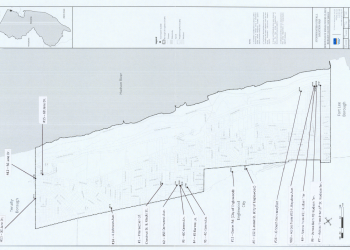
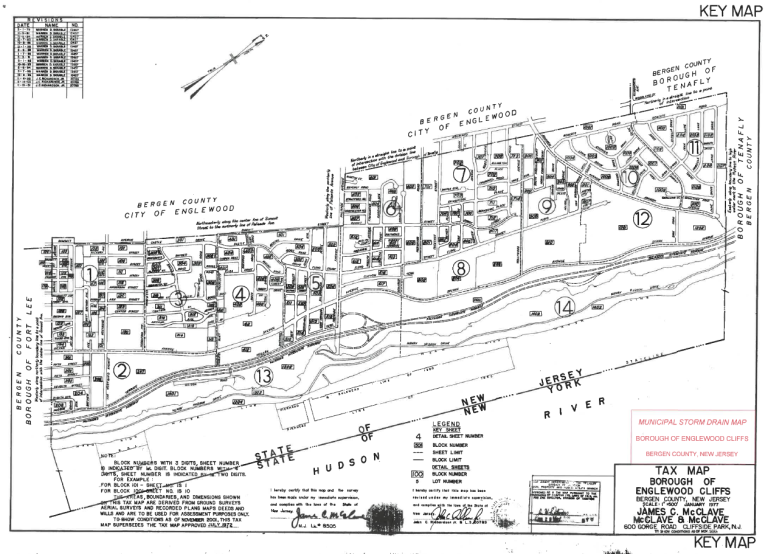
The Borough of Englewood Cliffs has completed Phase I of its Watershed Improvement Plan with the preparation of a comprehensive Watershed Inventory Report.
This report documents existing stormwater infrastructure, drainage areas, outfalls, interconnections, water quality conditions, and watershed characteristics throughout the Borough. It was developed using GIS mapping and field data to support informed planning, regulatory compliance, and future stormwater and flood mitigation improvements.
The Watershed Inventory Report serves as the foundation for identifying areas of concern, prioritizing infrastructure investments, and advancing long-term water quality and resiliency initiatives in coordination with NJDEP requirements.
Download: Watershed Inventory Report - Borough of Englewood Cliffs
Stormwater Resources
Click on the links below to learn more about stormwater and get access to educational resources.
Stormwater Ordinances/Regulatory Mechanisms
Stormwater Control Ordinance (SCO)
The Stormwater Management Ordinance establishes minimum requirements and standards to control stormwater runoff and protect water quality, groundwater recharge, and public safety.
This ordinance regulates land development activities by requiring the use of stormwater management measures, including green infrastructure and best management practices, to reduce runoff, minimize flooding, prevent erosion, and limit the discharge of pollutants into the municipal storm sewer system.
It outlines design and performance standards, site plan requirements, and long-term operation and maintenance responsibilities for stormwater management systems. Compliance with these requirements is mandatory for applicable development projects to ensure consistency with state regulations and environmental protection goals.
View the full Stormwater Management Ordinance:
Pet Waste Ordinance
Proper management of pet waste is an important part of protecting local waterways. The Borough’s Animal Ordinance establishes rules for the control, licensing, and care of animals, including the proper disposal of pet waste to prevent contamination of stormwater and local streams.
By following these regulations, residents help reduce pollutants in the municipal stormwater system, safeguard public health, and maintain a cleaner, safer environment.
View the full Animal Ordinance:
Feeding of Unconfined Wildlife
The Feeding of Unconfined Wildlife ordinance prohibits the feeding of wildlife on public property in order to protect public health, safety, and welfare. Feeding wildlife can attract animals to developed areas, increase safety risks, and contribute to environmental concerns, including impacts on stormwater quality.
The ordinance defines feeding as the placement or distribution of edible material intended to attract or feed wildlife. In general, no person is permitted to feed unconfined wildlife in public parks or on other municipally owned or operated property.
This regulation also establishes enforcement procedures and penalties for violations to ensure compliance and reduce negative impacts on the community and environment.
View the full Feeding of Unconfined Wildlife Ordinance:
Litter Control Ordinance
The Littering Ordinance establishes regulations to prohibit the improper disposal of waste on public and private property within the Borough. These requirements are intended to protect public health, safety, and welfare, and to prevent debris from entering the municipal storm sewer system.
Improper disposal of litter can contribute to stormwater pollution by allowing trash and debris to be carried by runoff into local waterways. This ordinance outlines restrictions on the placement, accumulation, and disposal of waste materials, as well as enforcement procedures and penalties for violations.
Compliance with these standards supports the maintenance of clean streets, reduces environmental impacts, and helps protect water quality.
View the full Littering Ordinance:
Improper Disposal of Waste Ordinance
The Improper Disposal of Waste Ordinance prohibits the unauthorized disposal, dumping, or accumulation of waste materials on public or private property within the Borough. These regulations are intended to protect public health, safety, and welfare, and to prevent environmental degradation.
Improper disposal of waste can contribute to stormwater pollution by allowing debris, chemicals, and other contaminants to be carried into the municipal storm sewer system and local waterways. This ordinance establishes standards for proper waste handling and outlines enforcement measures and penalties for violations.
Compliance with these requirements supports a cleaner community and helps protect water quality.
View the full Improper Disposal of Waste Ordinance:
Yard Waste Collection
The Yard Waste Collection regulations establish requirements for the proper handling and disposal of leaves, grass clippings, and other vegetative waste within the Borough. These standards are intended to prevent the accumulation of yard waste in streets and storm drains, where it can obstruct flow and contribute to stormwater pollution.
Residents are required to properly contain and place yard waste in designated areas and to follow seasonal collection schedules and guidelines. The placement of loose yard waste in roadways or near storm drain inlets is prohibited, as it may be carried by runoff into the municipal storm sewer system.
Compliance with these requirements helps reduce flooding, maintain proper drainage, and protect local waterways.
View full Yard Waste Collection requirements:
Retrofitting of Existing Storm Drain Inlets on Private Property
The Retrofitting of Existing Storm Drain Inlets Ordinance requires that certain storm drain inlets on private property be upgraded to meet current design standards that prevent the discharge of solid and floatable materials into the municipal storm sewer system.
Property owners are required to retrofit existing inlets with compliant grates or covers that restrict the passage of debris while maintaining adequate drainage. These improvements are typically required during site development, redevelopment, or when modifications are made to existing drainage systems.
The ordinance is intended to reduce the introduction of pollutants into local waterways and to ensure compliance with applicable state stormwater management regulations.
Stormwater Program Coordinator (SPC)

Englewood Cliffs
482 Hudson Terrace
Englewood Cliffs NJ 07632
Phone: (201) 569-5252
Office Hours:
Monday - Friday
9:00AM to 4:00PM
(Except Holidays)
Illicit Connections to the Municipal Separate Storm Sewer System.
§ 11-6.1. Purpose
The purpose of this section is to prohibit illicit connections to the municipal separate storm sewer system(s) operated by the Borough of Englewood Cliffs, so as to protect public health, safety and welfare, and to prescribe penalties for the failure to comply.
§ 11-6.2. Definitions.
For the purpose of this section, the following terms, phrases, words and their derivations shall have the meanings stated herein unless their use in the text of this section clearly demonstrates a different meaning. When not inconsistent with the context, words used in the present tense include the future, words used in the plural number include the singular number, and words used in the singular number include the plural number. The word "shall" is always mandatory and not merely directory. The definitions below are the same as or based on corresponding definitions in the New Jersey Pollutant Discharge Elimination System (NJPDES) rules at N.J.A.C. 7:14A-1.2.
DOMESTIC SEWAGE - Shall mean waste and wastewater from humans or household operations.
ILLICIT CONNECTION - Shall mean any physical or nonphysical connection that discharges domestic sewage, non-contact cooling water, process wastewater, or other industrial waste (other than stormwater) to the municipal separate storm sewer system operated by the Borough of Englewood Cliffs, unless that discharge is authorized under a NJPDES permit other than the Tier A Municipal Stormwater General permit (NJPDES Permit Number NJ 141852). Nonphysical connections may include, but are not limited to, leaks, flows, or overflows into the municipal separate storm sewer system.
INDUSTRIAL WASTE - Shall mean nondomestic waste, including, but not limited to, those pollutants regulated under Section 307(a), (b), or (c) of the Federal Clean Water Act (33 U.S.C. § 1317(a), (b), or (c).
MUNICIPAL SEPARATE STORM SEWER SYSTEM (MS4) - Shall mean a conveyance or system of conveyances (including roads with drainage systems, municipal streets, catch basin, curbs, gutters, ditches, man-made channels, or storm drains) that is owned or operated by the Borough of Englewood Cliffs or other public body, and is designed and used for collecting and conveying stormwater.
NJPDES PERMIT - Shall mean a permit issued by the New Jersey Department of Environmental Protection to implement to the New Jersey Pollutant Discharge Elimination System (NJPDES) rules at N.J.A.C. 7:14a.
NON-CONTACT COOLING WATER - Shall mean water used to reduce temperature for the purpose of cooling. Such waters do not come into direct contact with any raw material, intermediate product (other than heat) or finished product. Non-contact cooling water may, however, contain algaecides, or biocides to control fouling of equipment such as heat exchangers, and/or corrosion inhibitors.
PERSON - Shall mean any individual, corporation, company, partnership, firm, association, or political subdivision of this State subject to municipal jurisdiction.
PROCESS WASTEWATER - Shall mean any water which, during manufacturing or processing, comes into direct contact with results from the production or use of any raw material, intermediate product, finished product, by-product, or waster product. Process wastewater includes, but is not limited to, leachate and cooling water other than non-contact cooling water.
STORMWATER - Shall mean water resulting from precipitation (including rain and snow) that runs off the land's surface, is transmitted to the subsurface, is captured by separate storm sewers or other sewerage or drainage facilities, or is conveyed by snow removal equipment.
§ 11-6.3. Prohibited Conduct.
No person shall discharge or cause to be discharged through an illicit connection to the municipal separate storm sewer system operated by the Borough of Englewood Cliffs, any domestic sewage, non-contact cooling water, process wastewater, or other industrial waste (other than stormwater).
§ 11-6.4. Enforcement.
The provisions of this section shall be enforced by the police department or the superintendent of the department of public works or his designee of the Borough of Englewood Cliffs.
§ 11-6.5. Violations and Penalties.
Any person(s) who is found to be in violation of the provisions of this section shall, upon conviction thereof, be subject to a penalty not exceeding $1,000 or to imprisonment for a period not exceeding 90 days or to community service for a period not exceeding 90 days.
Privately-Owned Salt Storage Ordinance
Coming soon...